

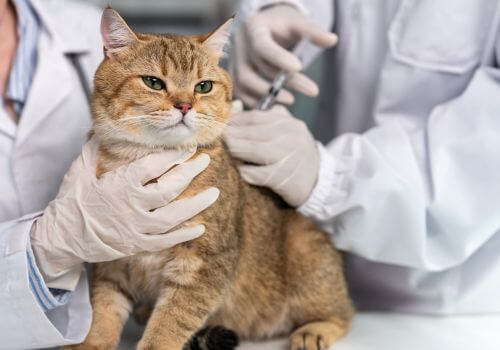
 Vaccinations play a vital role in protecting your cat from serious and preventable diseases. At Everhart Veterinary Medicine in Baltimore, MD, we help cat owners understand which vaccines their pets need and when to get them as part of a complete preventive care plan.
On this page, we'll answer common questions about cat vaccines, address common misconceptions, and explain why staying on schedule is key to long-term health. If your cat hasn't been vaccinated yet, or you're unsure about their vaccine history, contact us to get started.
What Exactly Are Cat Vaccinations?
A vaccination is an injection of a mixture of molecules that stimulates an immune response to a specific disease. An example would be the rabies vaccine, which contains parts of the rabies virus—not the entire virus. It's not an active or live virus, but parts of the virus that we inject into your cat to help them start to build antibodies so they can then mount an immune response should they ever come in contact with the actual virus in the wild. We also have vaccines for many different diseases in cats.
Are Cat Vaccinations Necessary?
Yes. Certain cat vaccines are necessary, or what we would call core vaccines, which means we recommend them in all cats. That's going to include the rabies vaccine and the core viral vaccine called FVRCP; some individuals call it feline distemper. And then, other vaccines might be necessary based on the lifestyle of your cat, particularly the feline leukemia vaccine.
What Vaccines Do You Recommend for Cats?
Cat vaccines fall into two groups: core vaccines and non-core vaccines. Core vaccines are recommended for every healthy cat because they protect against diseases that are widespread, severe, or a risk to people as well as pets. For cats, the core vaccines are rabies and FVRCP (often called feline distemper).
The feline leukemia (FeLV) vaccine is recommended for all kittens, and then for adult cats that go outdoors or have contact with other cats. Non-core vaccines, such as Bordetella and Chlamydia, are generally reserved for cats in high-exposure environments like catteries or shelters. Vaccines for FIV and FIP exist as well, but there isn't enough evidence to recommend them as standard practice at this time.

What Do These Vaccines Protect Against?
Rabies
Rabies is a fatal neurologic infection spread by wildlife such as bats and raccoons. It is required by law for all cats, whether they live indoors or outdoors. We recommend the 1-year feline rabies vaccine, which is the safer choice for your pet. A 3-year vaccine is available on request, but it carries a higher rate of vaccine-associated sarcomas—tumors that are locally invasive at the injection site.
At Everhart Veterinary Medicine, our policy requires every patient to have a current rabies vaccine or a yearly rabies titer on file in order to remain an active patient. This is for the safety of our staff.
FVRCP (Feline Distemper)
The FVRCP vaccine protects against three viruses:
- Feline viral rhinotracheitis (FVR) is a highly contagious respiratory infection caused by feline herpesvirus. It commonly causes sneezing, eye discharge, and fever.
- Calicivirus (C) affects the mouth and can cause oral ulcers, and it may also lead to systemic joint pain.
- Panleukopenia (P) is a highly contagious and potentially fatal virus that can cause severe diarrhea, vomiting, lethargy, fever, and dehydration.
Feline Leukemia (FeLV)
Feline leukemia is a virus that suppresses the immune system, leaving cats vulnerable to serious secondary infections such as pneumonia, gastrointestinal disease, and fungal infections. Cats with feline leukemia also have a higher rate of cancer later in life. It spreads through direct contact with infected cats or through shared food dishes and litter boxes.
What Is the Vaccination Schedule for Kittens?
At Everhart Veterinary Medicine, we recommend a comprehensive kitten vaccination schedule to ensure your kitten receives all the essential core vaccines. Starting at six to eight weeks of age, your kitten should begin a series of vaccinations to protect against critical diseases. The initial vaccination includes the FVRCP vaccine, which covers feline viral rhinotracheitis, calicivirus, and panleukopenia.
Following the initial vaccine, booster shots should be administered every three to four weeks until your kitten reaches 16 weeks of age. This typically means vaccinations at 9, 12, and 16 weeks. At around 16 weeks, your kitten should receive their first rabies vaccine.
It's also important to discuss the FeLV (feline leukemia virus) vaccine with your veterinarian. This vaccine is often started at 12 and 16 weeks of age, and the series is recommended for all kittens through at least one year of age. We recommend the leukemia vaccine for every kitten—even those you expect to keep strictly indoors—because plans can change and cats are talented escape artists, and we want them protected either way. Kittens should also be tested for feline leukemia and FIV as part of their routine kitten visits.
Maintaining this vaccination schedule ensures your kitten develops strong immunity against common and potentially fatal feline diseases. Regular veterinary visits will keep your kitten on track with their vaccination plan, providing them with the best start in life.
What Is the Vaccination Schedule for Adult Cats?
Keeping your adult cat up-to-date with vaccinations is important for their ongoing health and protection against diseases. At Everhart Veterinary Medicine, we recommend a structured adult cat vaccination schedule to cover all core vaccines.
- FVRCP: adult cats that are new to vaccination or have an unknown vaccine history receive two boosters spaced three to four weeks apart, and then a booster every three years. This protects against feline viral rhinotracheitis, calicivirus, and panleukopenia.
- Rabies: we recommend the 1-year feline rabies vaccine. A 3-year option is available on request, though it carries a higher rate of vaccine-associated sarcoma (see the rabies information above).
- For cats with outdoor access or those exposed to other cats, we recommend continuing the FeLV (feline leukemia virus) vaccine.
Regular veterinary visits every year are required for assessing your cat's health and determining any additional vaccines that may be necessary based on their lifestyle and risk factors. Keeping your cat on a consistent vaccination schedule allows them to remain protected against infectious diseases, promoting a long and healthy life.

Are There Any Risks or Side Effects Associated With Cat Vaccines?
There's always going to be some inherent risk. Fortunately, nowadays, vaccines are going to be minimal risk. The most common thing you'll see is a bit of lethargy for the rest of the day after the vaccines, but it's usually pretty minimal. Sometimes your cat might have a decreased appetite or soreness over the site where the vaccine was given, but most of the time, these things are very minimal.
The more rare side effects are vomiting, diarrhea, severe lethargy, hives, swelling of the face, and, while they aren't very common, they require immediate evaluation. The most discussed vaccine reaction in the cat is called the feline injection site-associated sarcoma. Fortunately, that is extremely rare. Some studies show it's as rare as 0.0001% of the time, but that is always a possibility that's important to consider, which is why we only want to vaccinate as often as we need to keep their immunity up, and no more than that.
We use adjuvant-free vaccines called BI Purevax which help reduce the side effects.
If My Cat Is Going to Strictly Live Indoors, Do They Still Need to Be Vaccinated?
Absolutely. Rabies is required by NM state law and is still a risk even if your cat never goes outside. We still recommend distemper in most cases, too, just because we keep our windows open in the summertime here, and some cats go out and about. You can also bring the disease home on your clothes when you have been visiting with a friend that has a cat. We want to minimize any potential risk factors by keeping those indoor kitties vaccinated.
Why Is It Important To Avoid Missing a Cat Vaccination?
Missing vaccinations can compromise your cat's immunity, making them susceptible to infections and reducing the overall effectiveness of their vaccination program. Regular veterinary visits and sticking to the recommended vaccination schedule allow your cat to remain well-protected throughout their life.
At Everhart Veterinary Medicine, your pet is our priority. If you have any questions, don't hesitate to contact our team. Our staff would love to talk with you! Don't forget to follow us on social media: Facebook, Instagram.